Waymore Tools
Today's Insights: BRICS: Trade Advantages and Economic Growth
Table of Contents
- Introduction
- Trade Advantages
- Strong Trade Complementarity
- Expanding Trade Scale
- Optimizing Trade Structure
Introduction
BRICS, as an international cooperation organization composed of emerging market countries, has occupied an increasingly important position in the global economy since its concept was first proposed. The concept was first proposed by the chief economist of Goldman Sachs in 2001 to describe four economies with huge growth potential: Brazil, Russia, India, and China. Subsequently, in 2009, the joining of South Africa formally formed the BRICS group. These countries not only have significant advantages in population and economic scale but also play an increasingly important role in global economic governance and international affairs. As time goes by, the economic strength of the BRICS group continues to increase, and its position in the global economy has become increasingly prominent, becoming an important force in promoting global economic growth and governance system changes.
Trade Advantages
What are the trade advantages of the BRICS countries?
1. China
- Manufacturing advantages: China has the most complete industrial system and the strongest manufacturing base in the world. This enables China to produce all kinds of high-quality electromechanical products and consumer goods to meet the needs of domestic and foreign markets.
- Export capability: With low labor costs and an efficient supply chain system, China's manufacturing products are competitive in price and can be exported in large quantities to BRICS countries and other international markets.
- Industrial upgrading: In recent years, China has been actively promoting the transformation and upgrading of its manufacturing industry, moving towards smart manufacturing, green manufacturing, etc., which will further enhance the international competitiveness of Chinese products.
2. India
- Advantages in technology and services: India has significant advantages in software and information technology services and has a large number of highly educated technical personnel.
- International exchanges: India's software and technology service industries have successfully entered the international market and established close cooperative relations with many countries and regions.
- Service industry development: In addition to the software industry, India's business process outsourcing (BPO) and other service industries are also developing rapidly, providing high-quality services to international customers.
3. Brazil
- Agricultural and mineral resources: Brazil has rich agricultural and mineral resources and is an important global exporter of food and raw materials.
- Export potential: Brazil's agricultural products such as soybeans, corn, and coffee enjoy a high reputation in the international market, and mineral resources such as iron ore and oil are also important export commodities.
- Economic diversification: Brazil is working hard to achieve economic diversification, reduce dependence on raw material exports, and develop emerging industries such as manufacturing and services.
4. Russia
- Energy and heavy industry advantages: Russia is one of the world's largest producers of natural gas and oil and also has significant advantages in the field of heavy industry.
- Resources and technology: Russia not only provides abundant natural resources but also has advanced energy and heavy industry technology to meet the needs of domestic and foreign markets.
- International cooperation: Russia is actively seeking cooperation with other countries to jointly develop energy and mineral resources and promote economic development.
5. South Africa
- Mineral resources and metal processing: South Africa has rich mineral resources, such as gold, diamonds, and platinum group metals, and the metal processing industry is also quite developed.
- Financial services: South Africa's financial industry has a certain influence internationally and provides a full range of financial services to domestic and foreign customers.
- Trade cooperation: South Africa maintains extensive trade cooperation relations with BRICS countries and other countries, promoting economic globalization and regional integration.
Strong Trade Complementarity and Huge Cooperation Potential
The different economic characteristics and resource advantages among BRICS countries make trade exchanges have significant complementarity. For example, China has a large demand for commodities such as minerals, oil, and soybeans from Brazil, and is also highly dependent on Russia's energy resources. This complementarity not only promotes the growth of trade between BRICS countries but also provides important support for the economic development of each country.
The Scale of Trade Continues to Expand and the Growth Momentum is Strong
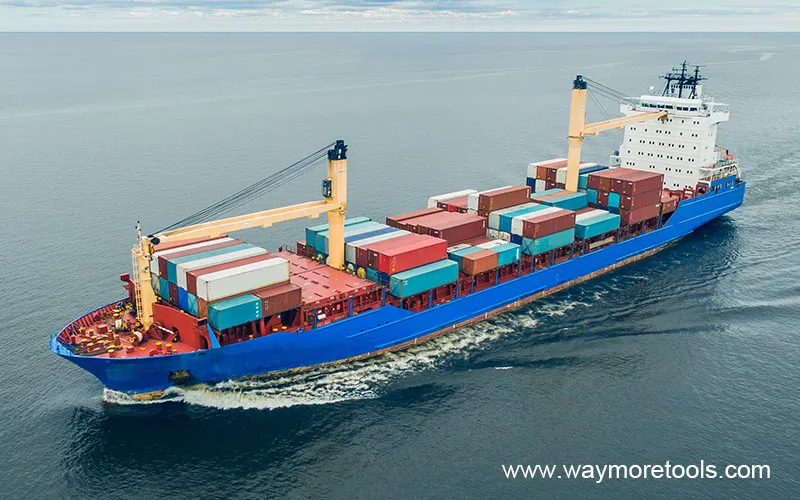
In recent years, the total import and export volume of BRICS countries has shown a significant growth trend. In particular, China, as the largest economy among the BRICS countries, has experienced rapid growth in its total import and export volume, which has played an important role in promoting the expansion of the overall trade scale of BRICS countries.
The Trade Structure is Constantly Optimizing, and High-Tech Products Have Great Potential
With the continuous development of the BRICS economies, the trade structure is also constantly optimizing. Countries are gradually shifting from exporting primary products to exporting high-tech and high-value-added products. For example, in China's exports to BRICS countries, high-tech products such as motor vehicles, batteries, and semiconductor devices have shown great growth potential and market competitiveness. This transformation has not only enhanced the status of BRICS countries in the global industrial chain but also injected new impetus into the economic development of various countries.