Waymore Tools
Today's Insights: Strategies for Machinery and Equipment Companies to Thrive in the Global Market - Unlocking Long-Term Success
Today, as the global economy becomes increasingly integrated, the machinery and equipment industry, as an important part of international trade, faces market competition and business opportunities from all over the world. For machinery and equipment companies, how to effectively manage foreign trade opportunities not only directly affects the company's market share and sales revenue, but also concerns the company's competitiveness and long-term development in the international market.
This article will explore the strategies and practices of machinery and equipment companies in foreign trade opportunity management, as well as how to improve management efficiency and success rate through technology and market insight.
1. The importance of foreign trade opportunity management
Foreign trade opportunity management refers to the process of collecting, analyzing, following up and converting information and needs of potential customers in the process of market development to achieve sales. In the machinery and equipment industry, this process is particularly critical because customers' purchasing decisions often depend on factors such as product performance, price competitiveness and service quality.
Market expansion and competitive advantage: Through effective opportunity management, companies can expand their market share, open up new geographical markets, and stand out in a highly competitive environment.
Customer relationships and brand value: Good opportunity management can not only improve customer satisfaction and loyalty, but also enhance the company's brand reputation and market influence.
Sales efficiency and cost control: Effective management of business opportunities can reduce sales cycles and costs, and improve the efficiency and performance of sales teams.
2. Business opportunity management strategies for mechanical equipment companies
Market analysis and target positioning
Market research: Understand the needs, competition, regulations and policies of the target market, and formulate corresponding market strategies and entry strategies. Customer analysis: Identify the characteristics and needs of potential customers and determine the most promising target customer groups.
Business opportunity acquisition and screening Internet marketing: Use online channels such as websites, social media and emails for marketing and customer attraction. Exhibitions and events: Participate in international exhibitions and industry events to directly contact potential customers and obtain business opportunities. Partnership: Establish and maintain relationships with partners such as agents and distributors to share business opportunities and resources.
Application of CRM system Information management: Centrally manage and track customer information, communication records and market feedback through the CRM system to ensure the timeliness and accuracy of information. Sales pipeline management: Manage the sales activities and progress of the sales team, optimize the sales pipeline and conversion rate. Customer service: Provide personalized customer service and support to enhance customer satisfaction and loyalty.
Data analysis and forecasting Market trend analysis: Analyze market dynamics and trends, and adjust sales strategies and product positioning in a timely manner. Sales forecasting: Based on historical data and market intelligence, predict sales and customer conversion rates, and formulate reasonable sales goals and plans.
3. The impact of technology and market trends
With the advancement of technology and changes in the market environment, mechanical equipment companies are facing new challenges and opportunities in the management of foreign trade business opportunities.
Artificial intelligence and big data: The application of artificial intelligence technology and big data analysis enables companies to more accurately predict market demand and customer behavior and optimize business opportunity management processes.
Cloud computing and mobile office: The popularity of cloud computing technology and mobile office platforms enables sales teams to obtain and update business opportunity information in real time, improve work efficiency and response speed.
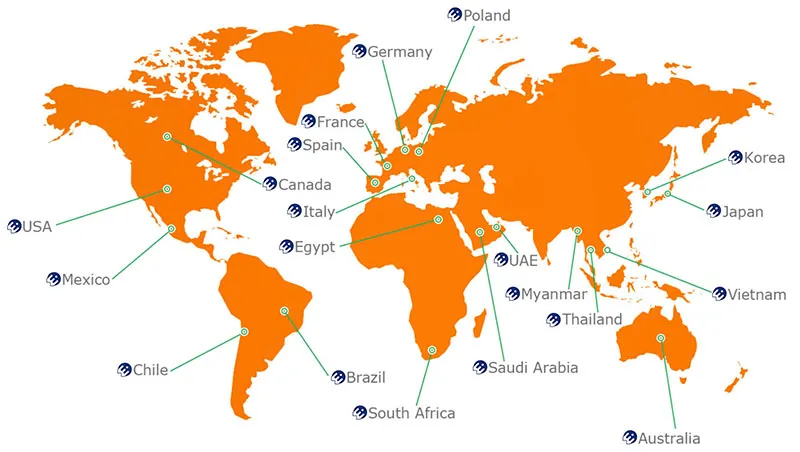
Development of global markets: Under the trend of globalization, mechanical equipment companies expand international markets and increase sources of business opportunities and sales channels through cross-border e-commerce and cross-border cooperation.
4. Future prospects and summary
With the intensification of competition in the global market and the continuous advancement of technology, mechanical equipment companies need to continue to innovate and improve in the management of foreign trade business opportunities.
Technology integration and intelligence: Strengthen technology integration and intelligent application, realize real-time information sharing and intelligent decision-making, improve management efficiency and market response speed.
Customer experience and service quality: Pay attention to customer experience and service quality, establish good customer relationships and brand image, and attract and retain more potential customers.
In conclusion, the success of machinery and equipment companies in managing foreign trade opportunities relies on a combination of technological support, market insight, and the ongoing enhancement of internal management processes and sales strategies. By prioritizing effective business opportunity management, these companies can maintain a strong competitive edge in the global market, ensuring sustainable development and long-term success.