Waymore Tools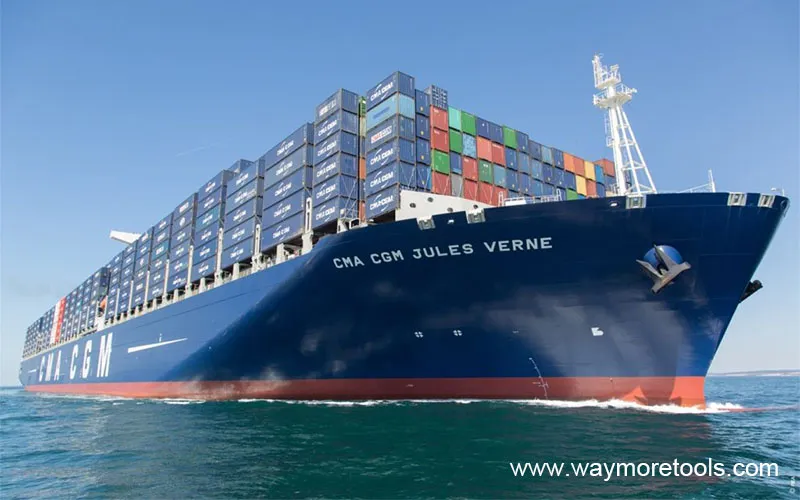
Today's Insights: U.S. importers stock up in advance
Table of Contents
- U.S. Importers Stock Up in Advance
- Industry Data and Shipping Trends
- Retail Strategies and Precautions
- Port Strike Concerns and Geopolitical Risks
- Shipping Rates and Economic Uncertainty
U.S. Importers Stock Up in Advance
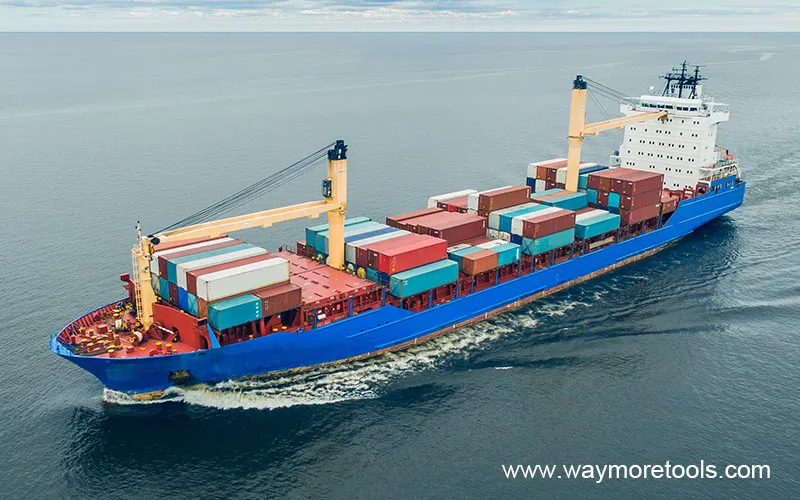
This summer, U.S. retailers have launched an import boom. Relevant data shows that U.S. container imports reached a recent record of 2.6 million twenty-foot standard container units in July, up 16.8% from the same period last year. Some experts pointed out that the large number of purchase orders from the United States is not solely driven by consumer spending. Instead, it is a precaution by retailers to prevent potential strikes at U.S. ports and to avoid disruptions during the peak shopping and delivery season leading up to Thanksgiving and Christmas this year.
Industry Data and Shipping Trends
Industry data showed that U.S. container imports and freight rates rose sharply in July, marking an earlier peak season for the global shipping industry compared to previous years. Reuters cited data from supply chain software provider Descartes Systems Group, indicating that U.S. container imports in July hit the third-highest monthly record, reaching 2.6 million twenty-foot standard container units, up 16.8% from the same period last year. This increase was partly driven by record imports from China.
Retail Strategies and Precautions
The retail industry has observed that companies importing toys, home furnishings, and consumer electronics have launched holiday promotions in advance to attract early shoppers. "Retailers don't want to be caught off guard," said Jonathan Gold, vice president of supply chain and customs policy at the National Retail Federation. Peter Sander, chief analyst at Xeneta, an air and sea freight analysis platform, noted that many shippers accelerated holiday orders, with some beginning to ship Christmas goods as early as May.
Port Strike Concerns and Geopolitical Risks
Some analysts have highlighted important factors contributing to this situation, including companies being wary of potential strikes by port workers and disruptions caused by geopolitical tensions in the Red Sea. Reuters reported that after negotiations between the International Longshoremen's Association and the American Maritime Union reached a deadlock, retailers grew concerned about potential strikes at ports from Maine to Texas in the United States this fall. International shipping giant Maersk also expressed concerns in a U.S. market briefing, stating, "If there is a full shutdown in the Gulf of Mexico and the East Coast of the United States, even a one-week stoppage could take 4 to 6 weeks to recover from, with large backlogs and delays increasing over time."
Shipping Rates and Economic Uncertainty
Xeneta data shows that non-contract spot freight rates for containers from the Far East to the West Coast of the United States rose 144% between the end of April and the beginning of July, but have since fallen 17%. Similar trends have been observed for container routes to the East Coast of the United States, Northern Europe, and the Mediterranean. Maersk also noted that the approaching U.S. election could contribute to economic uncertainty, potentially influencing demand before the November election. At the consumption level, some experts suggest that since consumer spending has been constrained by persistent inflation and high interest rates, the large number of purchase orders from the United States may not be directly linked to consumer spending.
Richard de Chazal, a macro analyst from the U.S. financial company William Blair, analyzed U.S. retail data and noted that while the retail data released by the U.S. Department of Commerce in June appeared strong, "it does not align with the notion that consumers are on the verge of collapse." He also pointed out that low-income consumers are increasingly relying on credit cards to maintain spending after depleting their savings during the pandemic, leading to rising defaults and declining confidence levels.