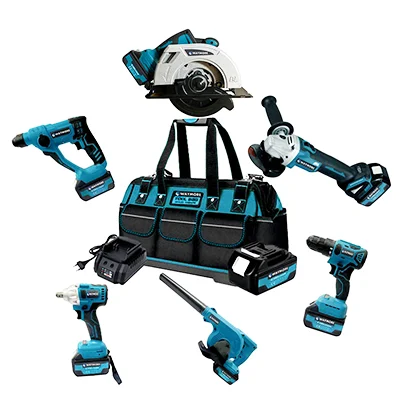
Waymore Tools
Today's news:
1. Kazakh Prime Minister Bektenov said on the 21st that although Kazakhstan's current economic development faces many challenges, the Kazakh government will continue to focus on key areas to promote steady economic growth.
2. Bolivian Minister of Public Works Montaño announced on the 22nd that Russia's first export of 50,000 tons of diesel to Bolivia has arrived at the northern Chilean port of Arica and will be delivered to various parts of Bolivia by land transportation in the near future.
3. According to Reuters on the 21st, a European automotive industry organization recently released a report pointing out that the sales of new electric vehicles in the EU fell significantly in May, down 12% year-on-year, especially in the German market, the decline was as high as 30%.
4. The latest poll conducted by Japan's "Daily News" across Japan from June 22 to June 23 showed that the support rate of the Kishida Cabinet fell by 3 percentage points from the agency's poll results last month to 17%. It has been below 30% for 12 consecutive months.
5. The potential market size of global brain-computer interface medical applications is expected to reach $40 billion to $145 billion in 2030-2040, of which the potential size of serious medical applications is $15 billion to $85 billion, and the potential size of consumer medical applications is $25 billion to $60 billion. Domestic research institutions are actively exploring brain-computer interfaces and have made some progress. Many listed companies are also following the pace of overseas markets and are expected to create more surprises. Bank of America and Barclays Bank recently reported that some AAA-rated investors in some commercial mortgage-backed securities (CMBS) suffered losses.
This is the first time that the highest-rated bonds backed by commercial real estate have suffered such losses since the 2008 financial crisis. The technical difficulties of brain-computer interfaces lie in the stability of flexible electrodes, chip development, supply chain stability, and surgical safety. There are two main solutions for BCI chips - general solutions and dedicated ASIC solutions. The general solution is suitable for a variety of application scenarios, while the dedicated ASIC solution is designed for specific application scenarios. Some companies and universities have begun to independently design ASIC chips for brain-computer interfaces, such as Neuralink, Brown University and Fudan University.
The design and manufacturing of these chips are relatively complex. Invasive technology relies on a reliable supply chain, especially the stable supply of components such as electrode chips. The closer to the brain tissue itself, the clearer and more accurate the EEG signal, but the technical difficulty coefficient and safety risk index of this operation are high. In particular, implanting foreign objects into the brain is very likely to trigger an immune response, and the human body may generate scar tissue between the electrode and the nerve tissue, causing the signal transmission to decay and disappear.
Support LinksIf you find the project helpful, please consider buying me a coffee:
Today’s exchange rate:
1 USD = 7.2585 RMB
1 EUR = 7.7833 RMB
1 GBP = 9.1918 RMB
Today's Insights: 3 top-level thinking methods that will benefit you for a lifetime
Carol Dweck, a psychology professor at Stanford University, mentioned in "Mindset: The New Psychology of Success": What determines the difference between people is not talent, not diligence, but thinking mode. In many cases, having the right way of thinking is even more important than simple hard work. Ordinary people change the results, excellent people change the reasons, and top masters change their thinking.
The following 3 top-level thinking methods will benefit you for a lifetime after they are developed.
• Facing difficulties: growth mindset
In the process of growth, it is inevitable to encounter setbacks, pressure and failure, and different people will take different attitudes to face them. Some people are unable to recover, while others become more and more courageous; some people crush themselves, while others turn them into motivation. I have heard such a saying: "Suffering can be a lesson. If you make good use of it, you are smart." And this kind of intelligence is to have a growth mindset.
People with a growth mindset will not be afraid of challenges, regard difficulties as opportunities for growth, and actively expand their abilities. People with a growth mindset will not label themselves or lose confidence in themselves. They know that only through continuous attempts and efforts can they break through themselves and improve their abilities. Growth mindset may not solve all problems, but when we grit our teeth and walk a long way, we will find that we have abandoned our once negative and timid selves and become a person who can decide our future direction. When you are strong enough and strong enough, all the unsatisfactory things will be a passing cloud.
• Find ways: Book-returning thinking
Einstein once said: "Thinking of what others dare not think, you have succeeded half; doing what others dare not do, you will succeed the other half." When facing difficulties, changing your way of thinking may find a way out. In the 1990s, the British Library was to move from the old library in London to the new library in St. Pancras. The old library had more than 13 million books, and it was estimated that the moving cost was as high as 3.5 million pounds. If you were the director, what could you think of to reduce the project budget? A young librarian approached the director and said to him: "I have a way, and you only need to give me 1.5 million pounds."
The next day, the young man published a message in the newspaper: From now on, the British Library will be open to the general public for free and unlimited borrowing, but due to the relocation of the library, borrowers are requested to return the books to the designated new library. The young man transformed the inherent thinking of "moving books" into the thinking mode of "returning books". With a cost of no more than a fraction of the original budget, 90% of the relocation work was completed. The lever of thinking is so powerful. When you encounter a problem and walk into a dead end, you might as well turn around, and maybe you can reach a bright future.
• Know how to make choices: subtraction thinking
A well-known Philosopher who's name is Lin Yutang once said: "It is better to give up wisely than to persist blindly." In life, most people think that having is happiness, but they have never thought that happiness comes from giving up having. Many people do "addition" to themselves regardless of everything: luxury cars, luxury houses, spending a lot of money; status, power, fame, endless. Desires are hard to satisfy, deviating from the track of happiness, and finally living more and more tired. In fact, only by learning to do "subtraction" can we "add" to life.
With people, see the good and follow the good; with things, think carefully and discern, and understand the wisdom between making choices. In a complex world, people are often troubled by various temptations and choices. Only by learning to make choices can we focus on what is really important. Do what you should do and don't do what you shouldn't do, this is the key to achieving a career. In many cases, putting down is often heavier than picking up, and losing is more practical than having. Thinking determines the way out. If the thinking can't reach the height, the footsteps can't reach it. The books you have read, the roads you have walked, the things you have experienced, and the people you have met are all stepping stones for upgrading your thinking. Continuously grinding on things, refining in your heart, and understanding in the dust, one day, you will jump out of the circle that imprisons yourself and see a wider world.