Waymore Tools
Today's news:
1. A report released by Statistics Canada on May 31 shows that Canada’s actual domestic production in the first quarter of 2024 increased by 0.4%, an annualized growth rate of 1.7%. However, the growth rate was lower than previously expected. On May 30, Russian Prime Minister Mishustin announced that Russia’s GDP increased in the first quarter by 5.4% year-on-year.
2. According to the Globalization Center in Kiel, Germany, the current European electric vehicle market demand has declined significantly. The imposition of additional tariffs on electric vehicles from China will cause product prices to continue to rise and further suppress demand, which will bring significant negative impacts on the electrification transformation of the European automobile industry. German brand cars exported from China to the EU will also be affected.
3. McKinsey predicts that by 2030, generative artificial intelligence will help nearly one-third of people in the United States and Europe automate their working hours. The rapid development of artificial intelligence may polarize the job market. On one hand, it will be difficult to recruit suitable talents for high-skilled and high-paying positions; on the other hand, low-wage industries may face a surplus of labor. In Europe, the share of higher-paid jobs is expected to increase by 1.8%, while the share of lower-paid jobs will be reduced by 1.4%.
4. The soaring travel prices and record high temperatures in popular tourist destinations in the Mediterranean region are leading more tourists to choose destinations with fewer tourists and cooler weather. This summer, the number of tourists planning a trip to Brussels, Belgium increased by 73% year-on-year, while the number of tourists to Munich, Germany increased by 63%, and to Zurich, Switzerland by 59%. Warsaw, Poland, and Amsterdam, the Netherlands, saw growth of 55% and 54% respectively.
5. The United States releases energy protection standards for various types of refrigeration products. On May 8, 2024, the U.S. Department of Energy’s Office of Energy Efficiency and Renewable Energy released a notification through the WTO about the current energy-saving plan: energy protection standards for various types of refrigeration products. This agreement aims to prevent fraud and protect consumers and the environment.
Refrigeration products involved in this notification include: refrigerators, freezers, and other refrigeration or freezing equipment (electric or other types), heat pumps; components thereof (excluding air conditioners under HS code 8415); environmental protection (ICS code: 13.020); general energy saving (ICS code: 27.015); household refrigeration appliances (ICS code: 97.040.30); and commercial refrigeration appliances (ICS code: 97.130.20).
Under the Energy Policy and Conservation Act, as amended ("EPCA"), energy conservation standards are specified for various consumer products and certain commercial and industrial equipment (including various types of refrigeration products, "MREFs"). In this notice of proposed regulations, the Department of Energy (DOE) is proposing the same rules as those set forth in the direct final rule in the Federal Register on May 7, 2024. If DOE receives adverse comments and determines that such comments may provide a reasonable basis for withdrawing the direct final rule, DOE will issue a revocation notice and continue enforcement of this proposed rule.
6. Indonesia recently revised an import rule aimed at solving the problem of thousands of containers being stranded due to trade restrictions at its ports. Some businesses had previously complained of disruption to operations due to the restrictions. Indonesia's Coordinating Minister for Economic Affairs, Airlangga Hartarto, announced at a press conference last Friday that a range of goods, including bags and valves, will no longer require import licenses to enter the Indonesian market. Although electronic products still require import licenses, technology licenses will no longer be required. Commodities such as steel and textiles will also continue to require import licenses, but the government has promised to process the issuance of these licenses quickly.
Support LinksIf you find the project helpful, please consider buying me a coffee:
Today’s exchange rate:
1 USD = 7.2455 RMB
1 EUR = 7.8636 RMB
1 GBP = 9.2279 RMB
Today's Insights: The situation of shortage of container has reappeared, and container freight rates soared by 50% in a single month
"Some shippers are not shipping now because the freight rates are too high, and they all choose to wait and see," the head of a freight forwarding company told reporters on May 30.
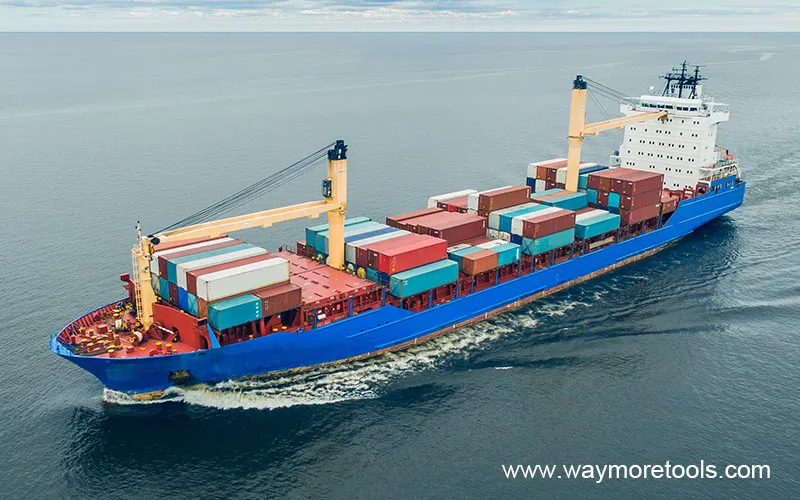
Since May, global container transportation prices have ushered in a new round of increases. Major liner companies have repeatedly raised prices, driving prices on major routes such as Asia-Europe and the West Coast of the United States to continue to rise, and the situation of "one box is hard to find" has reappeared. Industry insiders believe that the continued international geopolitical conflicts and the start of the overseas inventory replenishment cycle are key factors driving capacity tension and freight rates. How the subsequent freight rate trend will develop depends on the acceptance of downstream shippers to prices.
2. Recent industry rumors say that the Asia-Europe route has once again seen container shipping quotes of up to $10,000. Previously, only in 2021 did extreme freight rates of tens of thousands of dollars appear for 40-foot containers. At that time, the global supply chain was in chaos due to the epidemic, and container freight rates rose more than 10 times in one year.
It is reported that the actual freight rate on the Asia-Europe route is still some distance away from $10,000, but the price increase trend since May has been very obvious. According to data provided by freight forwarding companies, the price of a 40-foot container from Shanghai Port to Antwerp or Hamburg Port in early June was between $7,000 and $7,200, an increase of more than 70% compared with the freight rate in early May (about $4,000).
In the 23rd week (June 3rd to 9th), the center of the European line freight rate was around $3,900/$7,000 (20-foot container/40-foot container, the same below), and in the 24th week (June 10th to 16th), it was around $4,130/$7,160. The price of a large container worth tens of thousands of dollars may be a "diamond cabin," which is a special cabin with a certain premium. The freight index released by the Shipping Exchange shows that the Shanghai Export Container Settlement Freight Index (SCFIS), which reflects the actual freight, reported 3368.61 points on May 27 for the European route, up 55% from the end of April. The Shanghai Export Container Freight Index (SCFI), which reflects the booking price for the next 1 to 2 weeks, reported 2703.43 points on May 24, up 39% from the end of April.
3. Compared with the increase in freight rates caused by geopolitical conflicts in January this year, the triggering factors for this round of freight rate surge since May are more complicated. In addition to the soaring prices on the European route, the freight rates on the West Coast of the United States and the Central and South American routes are also rising step by step, even breaking the record since the beginning of this year before the European route.
The current surge in freight rates in the global container shipping market is mainly affected by two aspects. First, geopolitical factors make it difficult to resume flights in the Red Sea region. The liner detour around the Cape of Good Hope has caused chaos in the shipping schedule, and there is a large capacity gap on the Asia-Europe route. Shipping giant Maersk said in the report that there was a capacity gap of about 20% on the European route in the second quarter of this year. Second, the European and American inventory replenishment cycle was advanced, and the demand for cargo transportation gradually recovered. The initial value of the Eurozone PMI in May rose beyond expectations, reflecting the strong recovery momentum of the current demand for European manufacturing and service industries. As the main importer in Europe, China has a large demand for shipping capacity, resulting in a serious shortage of containers and space. Similar situations are also playing out in North America and Central and South America.
4. The spot supply of shipping capacity is difficult to meet the transportation demand, giving shipping companies the motivation to continuously raise freight rates. As space continues to be tight, some shipping companies have begun to renegotiate long-term contract prices with direct customers while compressing the space of long-term contract customers, which may cause long-term contract cargo to flow to the spot market and give shipping companies the driving force to continue to raise their quotations.
5. The rising freight rates test the bearing capacity of downstream shippers, which has also become a key factor in judging the subsequent freight rate trend.
"Although the current freight rate increase is not as drastic as during the epidemic, many shippers have chosen not to ship goods because they cannot afford the cost of rising freight rates," said the head of a freight forwarding company. In his view, the freight rate of $7,000 for large containers on the European line is the "limit" that some shippers can bear, and it is unlikely that it will continue to be higher than this level in the future.
6. At present, the market's acceptance of large container freight rates on the European line is generally between $6,000 and $6,200. Various shipping companies have created a tense atmosphere, and many shipping companies have closed the FAK (a uniform freight rate for all goods) and spot space booking mechanisms, which will not be reopened until June or later. This means that even if you are willing to pay higher freight rates, you may not be able to book space in time, further exacerbating the tension in the freight market.
7. For the future freight rate trend, it is recommended to pay attention to two changing factors: the overflow of long-term contract cargo to the spot market, which may be the driving force for the next round of spot freight rate increases; and the squeeze on the European line capacity supply by the US line and the Central and South American routes. The European line capacity supply may not have a large increase from June to July.
Freight rates will still have the momentum to fluctuate and rise in the short term, but this high freight rate situation may not last long. The current peak season of the international shipping market is generally advanced. When the peak season ends, the shortage of effective shipping capacity will be alleviated. At the same time, orders for new ships have been delivered one after another during the epidemic, and the total supply of shipping capacity continues to rise. If the geopolitical situation can be eased, the rapid increase in effective shipping capacity supply may have a significant impact on freight rates.