Waymore Tools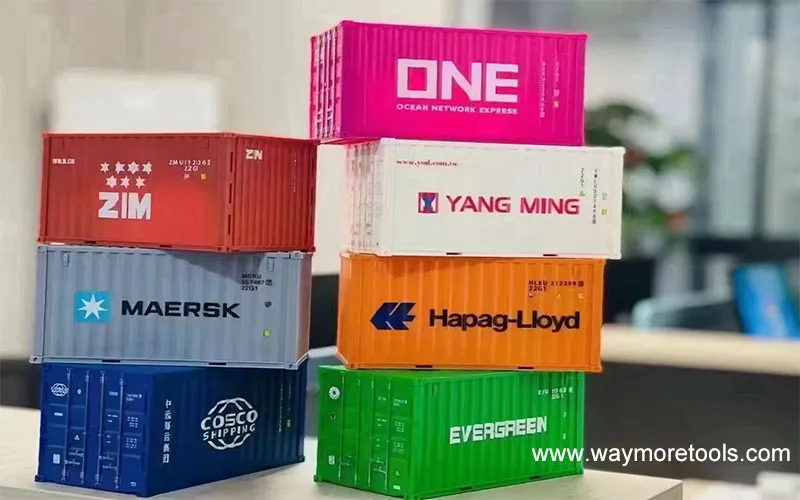
Today's news:
1. A report released by Statistics Canada on May 31 shows that Canada’s actual domestic production in the first quarter of 2024 increased by 0.4%, an annualized growth rate of 1.7%. However, the growth rate was lower than previously expected. On May 30, Russian Prime Minister Mishustin announced that Russia’s GDP increased in the first quarter by 5.4% year-on-year.
2. According to the Globalization Center in Kiel, Germany, the current European electric vehicle market demand has declined significantly. The imposition of additional tariffs on electric vehicles from China will cause product prices to continue to rise and further suppress demand, which will bring significant negative impacts on the electrification transformation of the European automobile industry. German brand cars exported from China to the EU will also be affected.
3. McKinsey predicts that by 2030, generative artificial intelligence will help nearly one-third of people in the United States and Europe automate their working hours. The rapid development of artificial intelligence may polarize the job market. On one hand, it will be difficult to recruit suitable talents for high-skilled and high-paying positions; on the other hand, low-wage industries may face a surplus of labor. In Europe, the share of higher-paid jobs is expected to increase by 1.8%, while the share of lower-paid jobs will be reduced by 1.4%.
4. The soaring travel prices and record high temperatures in popular tourist destinations in the Mediterranean region are leading more tourists to choose destinations with fewer tourists and cooler weather. This summer, the number of tourists planning a trip to Brussels, Belgium increased by 73% year-on-year, while the number of tourists to Munich, Germany increased by 63%, and to Zurich, Switzerland by 59%. Warsaw, Poland, and Amsterdam, the Netherlands, saw growth of 55% and 54% respectively.
5. The United States releases energy protection standards for various types of refrigeration products. On May 8, 2024, the U.S. Department of Energy’s Office of Energy Efficiency and Renewable Energy released a notification through the WTO about the current energy-saving plan: energy protection standards for various types of refrigeration products. This agreement aims to prevent fraud and protect consumers and the environment.
Refrigeration products involved in this notification include: refrigerators, freezers, and other refrigeration or freezing equipment (electric or other types), heat pumps; components thereof (excluding air conditioners under HS code 8415); environmental protection (ICS code: 13.020); general energy saving (ICS code: 27.015); household refrigeration appliances (ICS code: 97.040.30); and commercial refrigeration appliances (ICS code: 97.130.20).
Under the Energy Policy and Conservation Act, as amended ("EPCA"), energy conservation standards are specified for various consumer products and certain commercial and industrial equipment (including various types of refrigeration products, "MREFs"). In this notice of proposed regulations, the Department of Energy (DOE) is proposing the same rules as those set forth in the direct final rule in the Federal Register on May 7, 2024. If DOE receives adverse comments and determines that such comments may provide a reasonable basis for withdrawing the direct final rule, DOE will issue a revocation notice and continue enforcement of this proposed rule.
6. Indonesia recently revised an import rule aimed at solving the problem of thousands of containers being stranded due to trade restrictions at its ports. Some businesses had previously complained of disruption to operations due to the restrictions. Indonesia's Coordinating Minister for Economic Affairs, Airlangga Hartarto, announced at a press conference last Friday that a range of goods, including bags and valves, will no longer require import licenses to enter the Indonesian market. Although electronic products still require import licenses, technology licenses will no longer be required. Commodities such as steel and textiles will also continue to require import licenses, but the government has promised to process the issuance of these licenses quickly.
Support LinksIf you find the project helpful, please consider buying me a coffee:
Today’s exchange rate:
1 USD = 7.2455 RMB
1 EUR = 7.8636 RMB
1 GBP = 9.2279 RMB
Today's Insights: The situation of shortage of container has reappeared, and container freight rates soared by 50% in a single month
Recently, there is a very timely topic: What is the reason behind procrastination?
Five days ago, I received an assignment from my leader to write a goal plan. I could have finished it in half an hour on the first day, but I just didn't turn on the computer and kept dragging it until the last night, thinking about it for several days in vain.
I want to ask, what is the reason behind procrastination? How do we get rid of procrastination? I believe that many people resonate with this question. Before the holiday, they made plans with full confidence, imagining the satisfaction after finishing them, but the reality is that they did all kinds of things except what they should do. They really experienced the obstacles that "procrastination" brought to the completion of tasks. But what most people often don't realize is that procrastination is not a problem, but a signal.
1. The underlying reason for procrastination
Take writing a goal plan as an example. You set a plan for yourself according to "routine" or "time management habits", but the "motivation" in your mind may not think so. Use the classic "elephant and rider" metaphor. The rider said, let's finish the task quickly and have a good rest.
But the elephant would say--I am exhausted, I can't think about what will happen in the future, let me watch TV series fiercely and sleep in first! Of course, on the last night of the holiday, the elephant and the rider finally reached harmony. They said, hand in the manuscript quickly! You see: most self-management treats itself as a machine--we input an instruction and wait for it to be implemented. If it is not implemented, we think that there is something wrong with the machine.
We named this problem "procrastination". But people are not machines; they are living beings with internal motivation. When our rider and the inner "elephant" begin to conflict, we sometimes have to listen to the elephant. Procrastination is not a problem, but a signal. What is this signal? You need to listen carefully.
2. Procrastination is a signal of inner dislike
Sometimes, your heart does not like what you are doing now. Maybe it is the content of your work, or the way it is arranged. For example, I procrastinate on reprinting the book. I always can't spare the energy to revise the last chapter. After 2 months of procrastination, I finally realized that it was not because I didn’t have the energy, but because I didn’t quite accept the way the chapter “values” was written back then. It was different from the “simple, direct, and effective” that I was pursuing now.
I tried to revise it based on the original text, but it was really difficult to revise it. But I was unwilling to keep it the same as before. Because if it was reprinted, it would reflect my current level. So I was entangled inside. I kept procrastinating. Finally, I decided to rewrite it based on my thinking. In this way, it seemed that procrastination would disappear.
There were only a lot of difficult time challenges. This feeling is a bit like the difference between “engagement” and “marriage by appointment”. You know how happy it is to be engaged to someone you like! But being “arranged to marry someone” is forced. Naturally, it is full of resistance and procrastination. Therefore, procrastination is a signal that you don’t like something in your heart. Don’t force yourself to adapt to the plan; adjust the plan to make yourself like it. Understand this dislike, hear this dislike, and create something you like (maybe more difficult).
3. Procrastination is a sign of fear
Sometimes, the problem may be more basic. It is not a question of like or dislike, but inner fear. In most of the career consultations I have encountered, the decision to change jobs is delayed for about a year. This is true. Because people need to spend time to deal with their fears: What if I don’t have a job? What if I don’t like the new job? What if I don’t have income, what will happen to my family? What if I don’t have a new job? What will people think of me if I don’t have a new job?
These fears are real and need time to deal with. It may take a little bit to find a new direction, get to know people, communicate with family, count money, see the mentality of people who live well without money, and so on. They need to spend some time to deal with their fears. This is also named "procrastination". But once he overcomes this fear, he will find that this is one of the best decisions ever!
4. Procrastination is an information filter
There is another wonderful use of procrastination, which I often do deliberately. It is an information filter. Today's information is really too explosive, so setting up an "information filter" is a good way.
My previous method was to look at "hot topics". For example, I would look at hot topics every morning on the twitter and facebook, so that I didn't have to read a lot of news every day. But after a while, I found that there were too many popular hot topics, so I would focus on a certain field, such as workplace hot topics or psychological hot topics.
But this would still explode. Now I try to only look at "weekly hot topics" and "classic books". I found that after a week of precipitation, some irrelevant hot topics, such as "The girl danced and got into trouble", will be automatically filtered out, and the ones left are more important hot topics. The same is true for bestsellers.
Recently, a certain book is very popular and asked me to write a review. I read it carefully and felt that it didn't move me - this person is quite famous abroad, so is it my problem or the book's problem? Is it worth reading? I don't know, but wait for 3 months and time will tell. If you encounter uncertain information, just put it aside for a while, and time will tell you. Will I miss anything good in this way? I thought about the past 3 years. Procrastination doesn't seem to have helped me miss any real good things, but the time wasted because of greed for novelty has always been there. Don't treat procrastination as a problem, treat it as a signal. Understand this signal and create a new way that you like!