Waymore Tools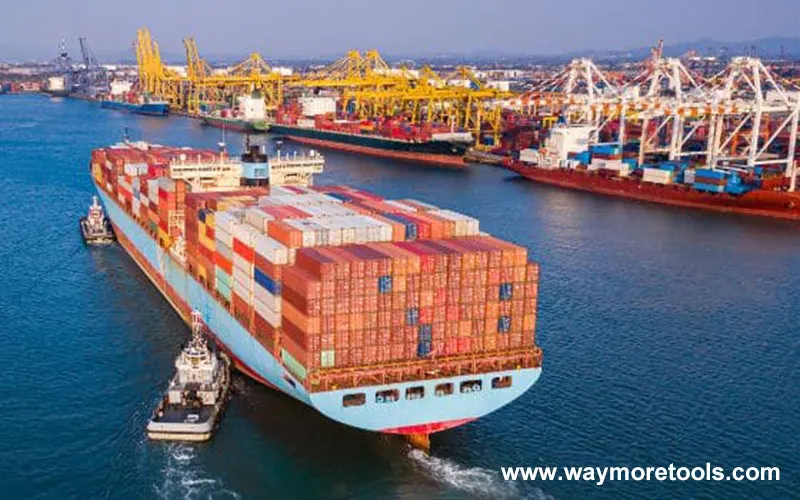
Today's news:
1. Saudi Arabia's Public Investment Fund (PIF) issued a statement on the 27th, announcing the establishment of Neo Space Group (NSG), a satellite and space company. The goal is to develop and strengthen Saudi Arabia's commercial space business and provide satellite and space solutions locally and globally.
2. According to the Financial Times on the 28th, people familiar with the matter revealed that India's Adani Group is in talks to enter the e-commerce and payment fields. The company is currently weighing the application for a license to operate on India's unified payment interface. It is also negotiating with banks to finalize the previously announced Adani co-branded credit card plan.
3. TrendForce reported that benefiting from the support of order demand from AI servers and the fact that ICT product demand did not see high growth in festival stocking but still maintained low growth compared with the first quarter. It is estimated that MLCC shipments in the second quarter will increase by 6.8% quarter-on-quarter to 123.45 billion, simultaneously driving a slight increase in revenue in the second quarter.
4. Omdia expects that the demand for OLED displays in the mobile PC market will grow at a compound annual growth rate of 37% from 2023 to 2031. This indicates that more and more brands are choosing to use OLED panels on their high-end laptops and tablets.
5. Gartner projects that global end-user spending on public cloud services is expected to reach $675.4 billion in 2024, a year-on-year increase of 20.4%. The two major factors driving this growth are generative artificial intelligence (GenAI) and application modernization.
6. Intelligent driving development may enter the consumer-led stage, and the industry trend of competition continues. In the past year, the development direction of autonomous driving solutions has clearly shifted from divergence to convergence. Assisted driving chips, represented by NVIDIA Orin, are popular with flagship models of major manufacturers and have become the "de facto standard" in the intelligent driving industry. Tesla's technology leadership and large-scale application of Transformer have made the pure visual route more popular. The current intelligent driving solution has seen a convergence of technical paths, which is also a market-oriented choice for car manufacturers. In the future, autonomous driving technology solutions of car companies may be further optimized and adjusted according to consumer preferences. This could potentially change the competitive landscape, but strong investments are likely to yield higher success rates.
7. Tiktok announced that the hot content verification mechanism will be implemented from May 27. Users who speak on the platform as parties involved in hot events will be contacted for identity verification. For users who fail to verify after the deadline, a series of measures including strong reminders and bans will be taken until the user provides credible materials before the restrictions are lifted.
8. Japan's Ministry of Finance reported that the balance of net foreign assets held by the government, enterprises, and individuals reached 471.3 trillion yen at the end of 2023, an increase of 12.2% year-on-year. Due to the depreciation of the yen, the yen conversion of foreign currency assets increased. This figure has set a new record for five consecutive years. Japan has been the world's largest net foreign asset country for 33 consecutive years.
9. Robotaxi's large-scale commercial use may be nearing a turning point. Seizing the travel market with the advantage of lower travel costs is the underlying driving force for the development of Robotaxi in various countries. The progress of Robotaxi's commercialization has entered the 1.0 stage, and other countries are seeking breakthroughs. It is estimated that by 2030, the proportion of domestic autonomous driving travel mileage will account for 11%. The scale of the Robotaxi market is expected to exceed one trillion by 2030.
Support LinksIf you find the project helpful, please consider buying me a coffee:
Today’s exchange rate:
1 USD = 7.249 RMB
1 EUR = 7.8542 RMB
1 GBP = 9.2511 RMB
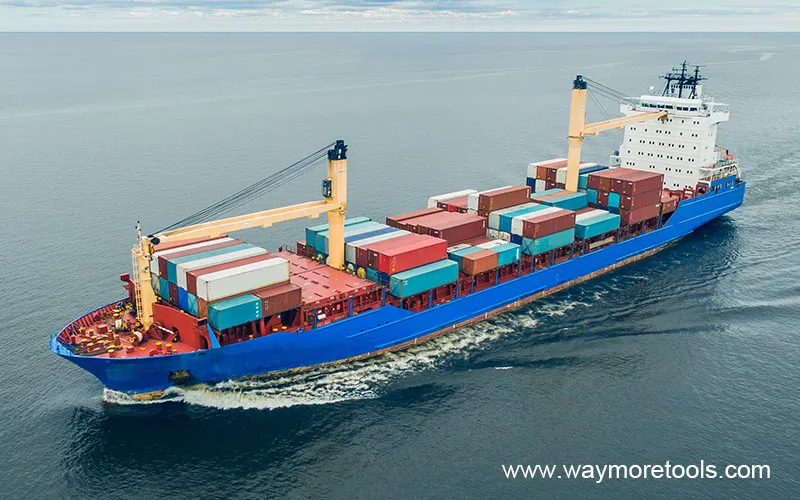
Today's Insights: Key Steps in International Shipping - How Many Do You Know?
There are many reasons for shipping goods between countries, most of which are for increasing the value of the goods. With the rapid development of e-commerce, a large number of small businesses now need to ship internationally. Here are the different steps in the transportation of goods.
There are many players involved in international shipping, including shipping companies, booking agents, freight forwarders, and customs brokers. The four main players in LCL (Less than Container Load) shipping are shippers, consignees, freight forwarders, and shipping companies.
Shipping companies are entities that transport goods by sea. You may never interact with them or see their documents or letters. However, freight forwarders are logistics providers you will deal with. They can arrange transportation from shippers to consignees - one of whom could be you. The shipper is the party shipping the goods from the origin; it can be you or the factory or seller you buy the product from. The consignee is the recipient of the goods; this may be you or the person you are selling the product to.
Five Physical Steps and Two Documentary Steps in International Shipping
There are five physical steps and two documentary steps in the transportation of goods from shipper to consignee that must be taken for every shipment. Each step has an associated cost that must be addressed by someone (usually the shipper or consignee). To avoid cost surprises and unnecessary delays in your supply chain, make sure that you clearly agree who pays for each of these seven steps every time you book a shipment.
The seven steps in international ocean shipping are: export haulage, origin handling, export customs clearance, ocean freight, import customs clearance, destination handling, and import haulage. If in doubt, check the contract between the shipper and consignee. If it is a sale of goods, it is usually agreed in the contract that the transfer of responsibility for the goods will also determine who pays what.
1. Export Transport
The first part of the transport is the export transport, which involves moving the goods from the shipper to the freight forwarder's premises. For less than a container load, the freight forwarder's premises is always the export consolidation center (origin warehouse), where the freight forwarder has its own personnel or a designated agent. Freight is usually transported by road (via truck), rail, or a combination. If the shipper is responsible for this part of the transport, it is usually arranged through a local transport company. If the consignee is responsible, it usually makes sense to use a freight forwarder who can provide export haulage as part of the international transport. The handling of the goods at the shipper's premises (loading onto the truck) is not considered part of the export transport, nor is the unloading of the truck at the freight forwarder's premises.
2. Export Customs Clearance
For every piece of goods leaving a country, customs formalities must be completed to meet regulatory requirements. Customs clearance involves making a declaration and submitting the required documents to the authorities and can only be performed by a company holding a valid customs license, known as a customs broker. Export customs clearance can be completed by a freight forwarder holding a valid license or by an agent appointed by the freight forwarder. Alternatively, it can be performed by a customs broker appointed directly by the shipper who is not necessarily involved in any other part of the transport process. The export customs clearance step must be completed before the goods leave the country of origin, and if not completed by the freight forwarder, it usually needs to be completed before the goods enter the freight forwarder's warehouse in the country of origin.
3. Origin Handling
Origin handling covers all the physical handling and inspection of cargo from the time it is received at the origin warehouse to the time it is loaded into a container for shipment. There are many steps under origin handling performed by different parties, but all are coordinated and accounted for by the freight forwarder or an agent designated by the freight forwarder. In short, when cargo is received, it is inspected (tally), scheduled for loading, consolidated with other cargo, loaded into containers, and moved to the port, where it is then loaded onto the ship. While the freight forwarder ultimately performs the origin handling, the shipper or consignee who purchases the freight forwarding services pays for it.
4. Ocean Handling
The freight forwarder selects a shipping company to perform the ocean freight from origin to destination to meet the shipment's required schedule. Freight forwarders have contracts with shipping lines for the transportation of containers. In this case, the shipper or consignee does not directly interact with the shipping line. The ocean freight costs are borne by the shipper or consignee. However, ocean freight is never the full cost of transportation from port to port. There are various surcharges imposed within the industry, such as fuel adjustment factors and currency adjustment factors, which are passed on to the shipper or consignee.
5. Import Customs Clearance
Import customs clearance can usually begin before the goods arrive at the destination country. Like export customs clearance, it involves preparing a declaration form and submitting it along with relevant documents so that the authorities can register the goods and collect any customs duties. Import customs clearance is handled by the freight forwarder, the freight forwarder's agent, or a customs broker appointed by the consignee. The import customs clearance procedure must be completed before the goods leave the bonded area of the destination country, usually before the goods leave the freight forwarder's destination warehouse.
6. Destination Handling
At the destination, the goods need to be loaded and unloaded before they can be released to the consignee. Destination handling involves transferring the container from the ship to the shore and from the port to the freight forwarder's destination warehouse. It also includes unloading the container and preparing the cargo for pickup by the consignee. Destination handling contains multiple destination charges and is always performed by the freight forwarder or an agent designated by the freight forwarder. The charges can be billed to either the shipper or the consignee, but full payment is required before the cargo is released to the consignee.
7. Import Transportation
The final leg of the shipment is the delivery of the cargo to the consignee. It can be performed by the freight forwarder or a local transport company designated by the consignee. If this part of the shipment is arranged by the shipper, it usually makes sense to use a freight forwarder who can also arrange import transportation. Import transportation usually includes transportation to a specific address, but does not include unloading the cargo from the truck, which is the responsibility of the consignee.
There are four main players in the seven steps outlined above: the shipper, the consignee, the freight forwarder, and the shipping company. Shipping companies are responsible for shipping, and shippers or consignees cannot contact them directly. Freight forwarders are the logistics providers that shippers or consignees mainly deal with. Therefore, when shipping goods internationally, you must choose a well-known, reliable, and professional freight forwarding company.