 WAYMORE TOOLS
Industrial Bearings: Types, Seals vs. Shields, and How to Choose the Right Bearing for Your Application
TFL Bearing, ISO-certified industrial bearing manufacturer
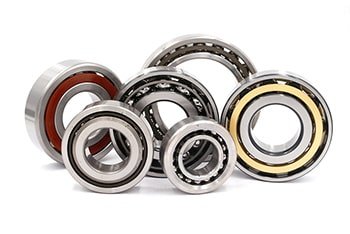
What Are Industrial Bearings and Why Do They Matter?
Bearings are the critical joints of every machine. Whether it is a construction excavator, an electric motor, a machine tool spindle, a food processing line or a medical CT scanner, something inside it is rotating — and that rotation depends on a bearing. A bearing supports the rotating shaft, reduces friction between moving parts, absorbs radial and axial loads, and keeps the whole assembly running smoothly, quietly and efficiently. Choose the right bearing and a machine can run reliably for 20,000–50,000 hours; choose the wrong one and you get noise, heat, vibration and costly unplanned downtime.
As a power tools manufacturer, we work with bearings every day, and we have learned that sourcing them from a specialist matters. This guide summarizes the bearing knowledge shared by our industry partner TFL Bearing, an ISO-certified China bearing manufacturer serving 25,000+ global customers — so that buyers, importers and maintenance teams can make better-informed decisions.
The Main Bearing Families and What They Do
Industrial bearings fall into a few well-defined families, each designed for specific load directions, speeds and environments. A complete industrial bearing catalog covers all of them:
• Ball bearings — the most widely used family, with point contact between polished steel balls and raceways. Sub-types include deep groove ball bearings (the all-rounder that handles combined radial and axial loads at high speed), miniature ball bearings (outer diameter under 9 mm, used in medical devices, instruments and electronics), self-aligning ball bearings (tolerate shaft misalignment), thrust ball bearings (pure axial loads), angular contact ball bearings (single-direction axial thrust, often mounted in pairs) and precision ball bearings (machine tool spindles and rotary tables).
• Roller bearings — line contact instead of point contact, which means much higher load capacity. This family includes needle roller bearings (maximum load in minimum radial space), cylindrical roller bearings (pure radial, high speed), tapered roller bearings (combined loads, classic in wheel hubs and gearboxes), spherical roller bearings (self-aligning, heavy-duty shock loads) and cross roller bearings (robotic joints and precision rotary tables).
• Mounted bearings and housings — insert bearings pre-assembled into pillow blocks and plummer blocks, the standard solution for conveyors, fans, agricultural equipment and other shafts that need simple, replaceable support.
• Linear motion products — linear ball bearings, guides and rolling guides that turn rotation-based machinery into precise straight-line movement on production lines and CNC equipment.
• Special bearings — cam followers and track rollers for automated machinery, plus ceramic bearings for high-speed, electrically-insulated and corrosion-prone applications.
Sealed (2RS) vs. Shielded (ZZ) Bearings: The Most Common Selection Decision
Ask any bearing engineer and they will tell you: the single most common choice buyers face is between rubber seals and metal shields. Bearings are precision components — once dust, water or lost lubricant gets inside, failure follows quickly. The protection is built into the bearing designation itself.
• Rubber contact seals (suffix 2RS / DDU): a flexible NBR or Viton lip makes physical contact with the inner ring, creating a tight barrier. This offers the highest protection against fine dust, water and moisture, and locks grease in for long service intervals. The trade-off is contact friction, which generates heat and limits maximum speed. Best for agricultural machinery, conveyors, automotive hubs and any wet or muddy environment.
• Metal shields (suffix ZZ / 2Z): stamped steel plates keep a narrow non-contact gap with the inner ring. With zero added friction, shielded bearings run at the same high speeds as open bearings and stay cooler. The trade-off: they deflect large debris but cannot stop liquid or microscopic dust. Best for electric motors, fans and other clean, high-RPM applications.
A quick rule of thumb from TFL's engineering team: high RPM + clean environment → ZZ; dust, water or mud → 2RS. For a full comparison with troubleshooting tips (seal popping, overheating, grease leakage), the shielded vs. sealed bearings guide on TFL's technical blog is a useful reference.
When Standard Steel Is Not Enough: Stainless Steel Bearings
In food and beverage plants, chemical processing, marine environments and medical equipment, ordinary bearing steel will rust. Stainless steel bearings solve this:
• 440C stainless steel rings and balls (vacuum quenched and tempered) offer the best combination of corrosion resistance, hardness and wear resistance — suitable for high-load, high-speed and high-precision applications.
• 304 suits light-load, low-speed machinery; 316, with added molybdenum, withstands the harshest marine and acidic environments and is the choice for medical devices.
• Performance highlights: operating temperatures from −60°C to +300°C with proper lubrication, natural suitability for washdown and food-grade environments (with USDA H1 food-grade grease), and average service life of 20,000–50,000 hours.
TFL publishes a detailed guide to stainless steel deep groove ball bearings covering materials, temperature ranges and application selection.
Industries That Depend on Quality Bearings
Precision bearings are everywhere — even in the harshest conditions. TFL Bearing supplies solutions across a wide range of industries:
• Construction machinery and excavators — heavy shock loads, dust and mud demand rugged sealed roller bearings.
• Electric motors and generators — high-speed, low-noise operation calls for shielded deep groove or precision bearings.
• Automotive — wheel hubs, gearboxes and alternators, supplied to almost all well-known vehicle manufacturers.
• Machine tools and rotary tables — precision angular contact and cross roller bearings for spindle accuracy.
• Robotics and automation — compact, high-rigidity bearings for joints and linear axes on production lines.
• Medical devices and semiconductor equipment — miniature, stainless and ceramic bearings where cleanliness and precision are non-negotiable.
• Food processing — corrosion-resistant, washdown-ready bearings for wet and chemically aggressive environments.
Five Practical Tips for Buying Industrial Bearings
• Match the designation to the environment, not just the size. Two bearings with identical dimensions (bore × outer diameter × width) can differ completely in seals, clearance (C2/C3/C4) and material — and those details decide service life.
• Check stock and lead time. Downtime is measured in hours, not weeks. TFL keeps one million bearings in stock with most configurations shipping in 7–10 days, and supports small batches with no minimum order quantity — ideal for maintenance teams and urgent replacement needs.
• Verify brand authenticity. The market is full of counterfeits. Work with suppliers that cooperate directly with leading original manufacturers — TFL distributes genuine SKF, KOYO, NTN and other brands alongside its own production line.
• Install correctly. Never strike a bearing with a hammer; use a fitting tool kit or arbor press and apply force only to the ring with the tight fit. Pressing through the rolling elements causes invisible damage that leads to early failure.
• Grease properly. Over-lubrication is as damaging as under-lubrication — excess grease creates internal pressure that can pop seals out of their grooves. Follow the recommended fill amount and re-greasing interval for your speed and temperature.
Partner With a Bearing Specialist
If your business needs bearings — whether for OEM production, distribution or equipment maintenance — a specialist supplier makes the difference. TFL Bearing combines its own production with genuine-brand distribution, backed by a one-year warranty commitment, a money-back satisfaction guarantee and same-day shipping on stocked items. Their engineering team provides everything from product training to sales support and custom bearing solutions built to your specifications.
For Industrial Bearings, visit TFL Bearing. Explore the full Power Tools range or the Angle Grinder collection — bearings and spare parts available for wholesale buyers with OEM/ODM support.
Get In Touch
Request a Free Quote
Tell us your requirements and get a wholesale quote within 24 hours.